This post contains an affiliate or referral link. If you use it, we may receive a commission or reward at no extra cost to you. How this works.
“Start a newsletter” is common side income advice, but it’s rarely explained how the money arrives. Here are the six main income streams, how each one works, and when it usually becomes realistic.
A quick note: I use beehiiv for my own newsletters, and the beehiiv links in this post are my affiliate link. Sign up through it and you’ll get a 14-day free trial and 20% off your first 3 months on a paid plan. I may earn a commission, at no extra cost to you.
1. Affiliate links
How it works: you recommend a product or service you genuinely use, with a special link. If a reader signs up or buys, you earn a commission or reward.
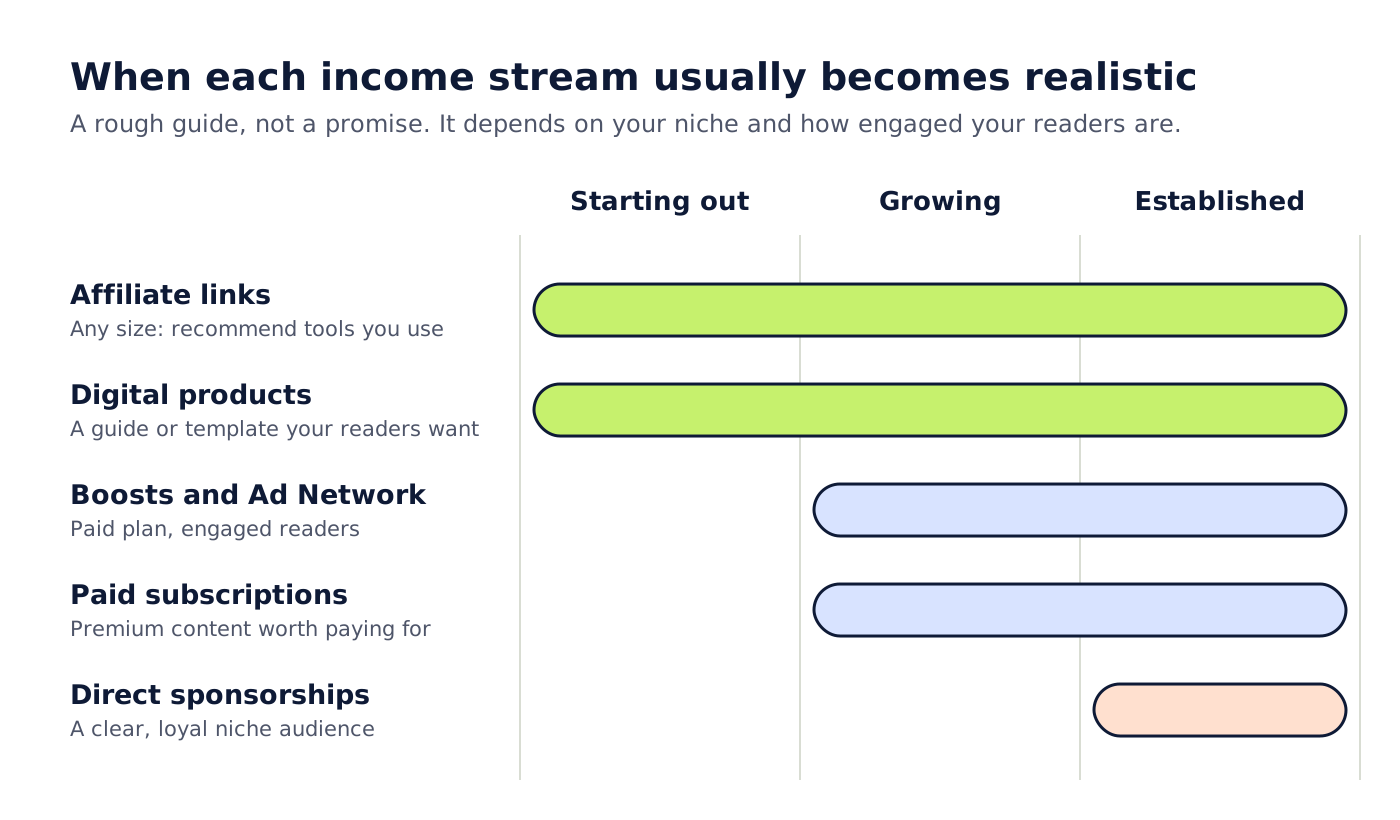
When it works: from day one. Even a small, trusting audience can act on a good recommendation. The key is relevance: one well-matched recommendation beats ten random links.
Watch out for: recommending things you haven’t used. Always label affiliate links clearly. It’s required under UK advertising rules, and readers trust you more for it.
2. Digital products
How it works: you create something once, such as a guide, template, checklist or short course, and sell it to readers.
When it works: early, if you’ve spotted a problem your readers keep asking about. It’s one of the most genuinely passive streams, because the product keeps selling after you’ve made it.
3. Boosts and recommendations
How it works: on beehiiv, other newsletters can pay you when your readers subscribe to them through your recommendation. It works in reverse too: you can pay to grow your own list.
When it works: once you’re on a paid plan and have readers who trust your suggestions.
4. Ad networks
How it works: instead of finding sponsors yourself, you join a network that matches your newsletter with advertisers. beehiiv’s Ad Network is included on its paid plans, and you’re typically paid based on how many readers open or click the ads.
When it works: once your open and click rates are healthy. Advertisers pay for attention, not just list size.
5. Paid subscriptions
How it works: readers pay a monthly or yearly fee for extra content, such as a premium issue, deeper guides or community access.
When it works: once you’re publishing something readers value highly enough to pay for. Many newsletters keep a free weekly issue and add a paid tier on top. If you want to test the idea first, you can set up a newsletter on beehiiv for free and add a paid tier later.
The maths is straightforward. If 100 readers pay £5 a month, that’s £500 a month before card processing fees. beehiiv charges a 0% platform commission on subscription revenue, so apart from Stripe’s processing fee, you keep the rest. Some other platforms take a percentage, so check before choosing one.
Good to know: Paid subscriptions, Boosts and the Ad Network all need a paid beehiiv plan. The free plan is for building your audience first. When you upgrade, my link gets you a 14-day free trial and 20% off your first 3 months.
6. Direct sponsorships
How it works: a business pays you directly to feature them in an issue, usually at a fixed price per placement.
When it works: once you have a clear, loyal niche audience that a specific type of business wants to reach. A newsletter for UK first-time buyers, for example, is attractive to mortgage brokers and conveyancers even with a modest list.
Which streams should you start with?
| Stream | Effort to set up | Needs a paid plan? | Best stage |
|---|---|---|---|
| Affiliate links | Low | No | From the start |
| Digital products | Medium, once | No | From the start |
| Boosts | Low | Yes | Growing |
| Ad Network | Low | Yes | Growing |
| Paid subscriptions | Medium, ongoing | Yes | Growing |
| Direct sponsorships | Medium, per deal | No | Established |
For most new newsletters, the best plan is to start with affiliate links and one small digital product, then add Boosts, ads or a paid tier once your readers are engaged. If you haven’t started yet, my guide to starting a newsletter as a side income covers the first steps.
Measure it, so you can manage it
Treat your newsletter like a small business: once a month, note your earnings by stream and your key numbers (subscribers, open rate, click rate). Over time you’ll see which streams are worth your effort, and you can do more of what works.
Don’t forget tax. In the UK, if your total income from self-employment goes over £1,000 a year, you’ll usually need to register for Self Assessment, so keep a simple record of what you earn and spend.
The short version
Newsletters earn through six main streams: affiliate links, digital products, Boosts, ad networks, paid subscriptions and sponsorships. Affiliate links and digital products work from the start; the rest become realistic as your readers become engaged. Most successful newsletters mix a few. If you want the tools built in from day one, start on beehiiv’s free plan and upgrade when the numbers justify it.
Common questions
How many subscribers do I need to make money from a newsletter?
There's no magic number. Engagement matters more than size: a small list of readers who open and click can earn more than a large list that ignores you. Affiliate links and digital products can start working with a few hundred readers.
Does beehiiv take a cut of my paid subscriptions?
beehiiv says it takes 0% of your paid subscription revenue. You still pay the card processing fees charged by Stripe, the payment provider, and you need a paid beehiiv plan to use paid subscriptions.
Is newsletter income really passive?
Partly. Income from older issues, evergreen digital products and automated recommendations can keep coming in with little effort. But most newsletters still need you to write regularly, so think of it as semi-passive.
Do I need to declare newsletter income for tax?
Usually, yes, above a certain level. In the UK, the trading allowance lets you earn up to £1,000 a year from self-employment tax-free. Beyond that you'll normally need to register for Self Assessment. Check GOV.UK for your circumstances.
This article is general information, not personal financial advice. Your situation is your own, so check the details for yourself or speak to a regulated adviser before making big decisions. Where investments are mentioned, their value can go down as well as up.