This post contains an affiliate or referral link. If you use it, we may receive a commission or reward at no extra cost to you. How this works.
There’s an old management saying: you can’t manage what you don’t measure. It’s true of a team at work, and it’s true of household money. Energy is one of the biggest bills most families pay, and one of the least understood. Most of us glance at the direct debit, sigh, and move on.
This guide changes that. Grab your latest bill or open your supplier’s app, and in about ten minutes you’ll know what you use, what you pay, and whether switching to Octopus Energy could cut your costs.
A quick note: I’m an Octopus customer, and the Octopus links in this post are my referral link. If you switch through it, you get £50 credit and so do I. It doesn’t cost you anything, and I’d still tell you to compare first.
Step 1: Find the five numbers that matter
Your bill has a lot on it, but only five numbers really matter.
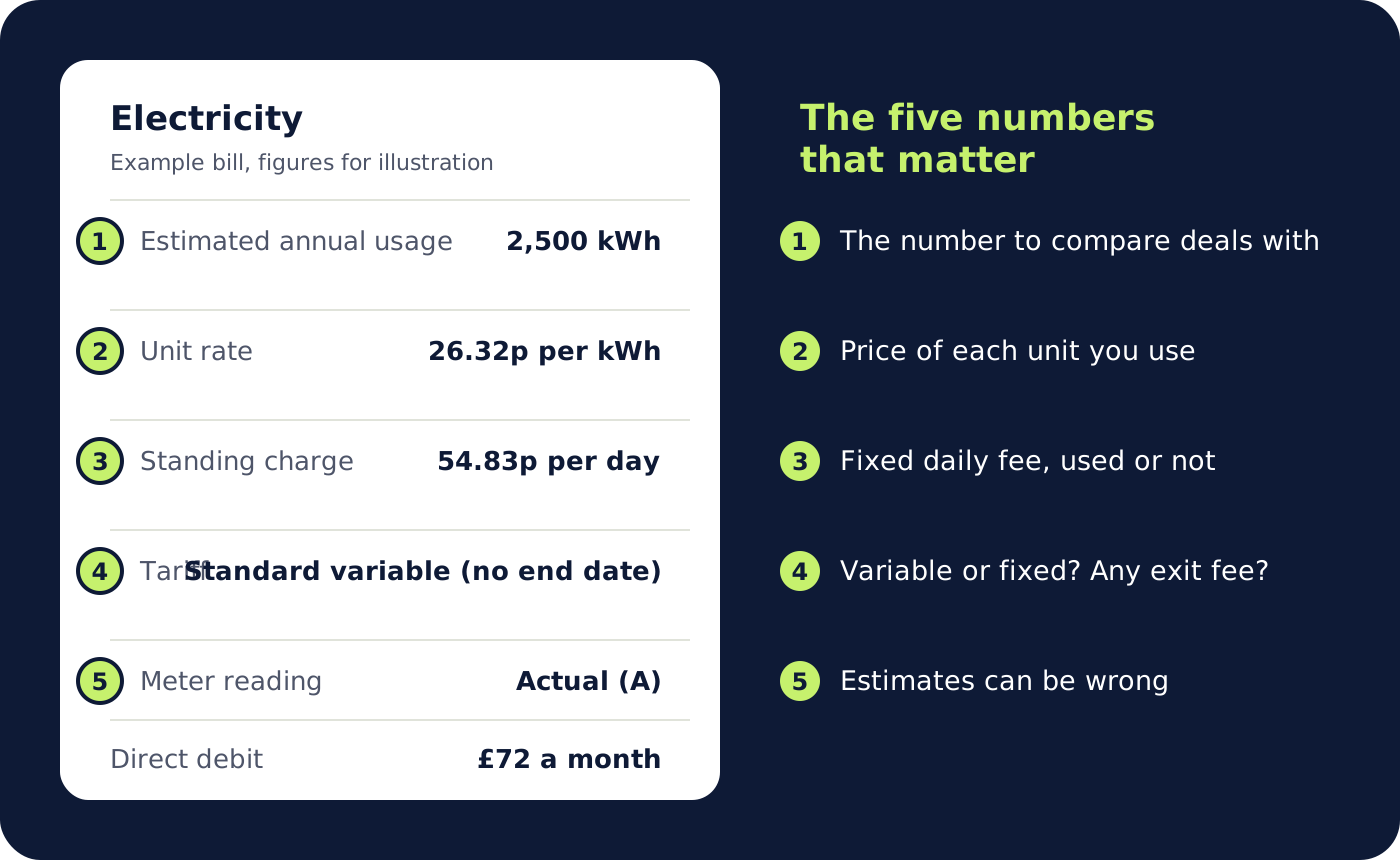
- Annual usage (kWh): how much energy your home used over the last year. This is the number you need to compare deals accurately.
- Unit rate (pence per kWh): the price of each unit you use.
- Standing charge (pence per day): a fixed daily fee for being connected, which you pay even if you use nothing.
- Tariff name and end date: whether you’re on a variable or fixed deal, and whether leaving early would cost you an exit fee.
- Meter reading type: whether your bill uses actual (A) or estimated (E) readings. Estimates can mean paying too much or too little.
If you have gas and electricity, you’ll have a separate usage, unit rate and standing charge for each.
Step 2: Understand what the price cap does (and doesn’t do)
The energy regulator, Ofgem, sets a price cap every three months. For 1 October to 31 December 2026, the cap works out at £1,723 a year for a typical household paying by direct debit, a rise of 4%, or £60 a year. Most of that rise comes from gas: gas bills are going up by about 8%, while homes that don’t use gas will see an increase of less than 1%.
The important thing to understand is that the price cap isn’t a cap on your bill. It limits the price of each unit and the daily standing charge. Use more energy than a “typical” home and you’ll pay more than £1,723. Use less and you’ll pay less.
Ofgem’s “typical” household uses 2,500 kWh of electricity and 9,500 kWh of gas a year. Your home could be well above or below that, which is why your own usage matters more than any headline figure.
Good to know: Ofgem will announce the next price cap, for January to March 2027, on 25 November 2026. If you’re on a standard variable tariff, your prices change whenever the cap does.
Step 3: Work out what you really pay
Here’s the simple formula for each fuel:
(Your annual kWh × unit rate) + (365 × standing charge) = your yearly cost
Using the October 2026 price cap averages for electricity, a home using 2,500 kWh a year pays about £858:
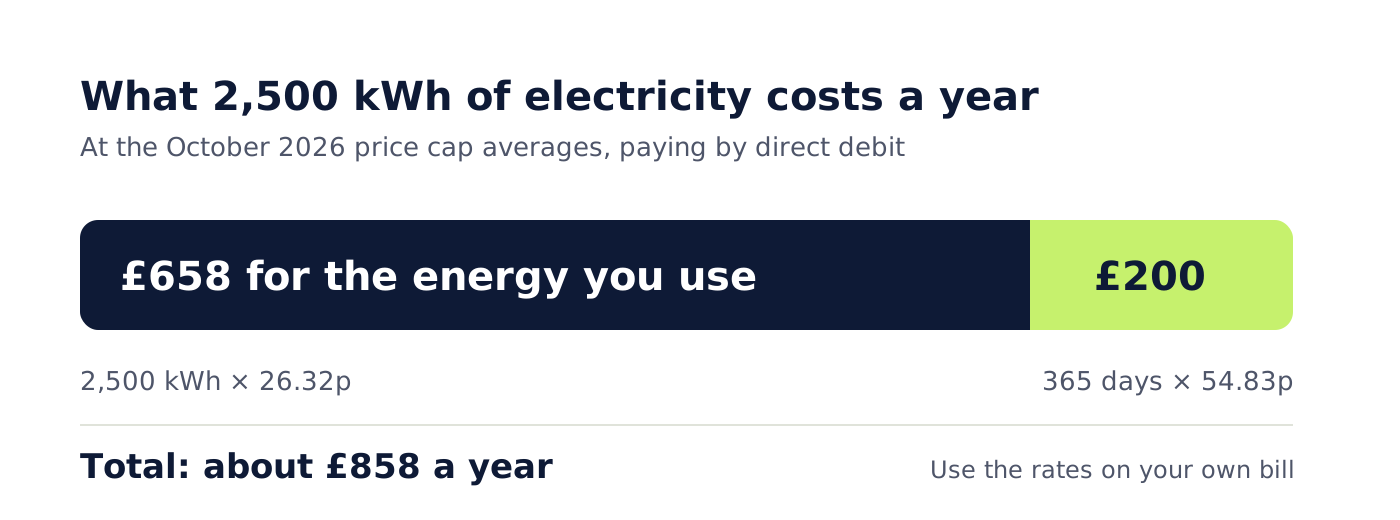
Do the same with the numbers on your own bill for electricity and gas. Rates vary by region and payment method, so always use your own figures rather than the averages.
Step 4: Track it, so you can manage it
Once you know your numbers, keep an eye on them. This is where small habits compound.
- Give regular meter readings, or get a smart meter, so your bills are based on what you actually use. With a smart meter, most supplier apps, including Octopus’s, show your usage without you lifting a finger.
- Add energy to your weekly money check-in. Once a month, note your usage and compare it with the same month last year, not last month, because energy use is seasonal.
- Check your direct debit against your usage. If a large credit balance has built up, you can ask your supplier to refund it or lower your payments.
Step 5: See which Octopus tariff might suit you
One reason people like Octopus is its range of tariffs for different kinds of homes. Here are the main ones:
| Tariff | How it works | Might suit you if… |
|---|---|---|
| Flexible Octopus | Variable prices that move with the price cap, no exit fees | You want simplicity and freedom to leave |
| Fixed | Prices locked for the length of the deal | You want certainty for budgeting |
| Tracker | Prices change daily, following wholesale prices (smart meter needed) | You’re happy with daily price changes |
| Agile | Prices change every half hour (smart meter needed) | You can avoid using lots of energy between 4pm and 7pm |
| Intelligent Octopus Go | A cheap overnight window for charging an electric car | You have an EV you can charge overnight |
Not sure where to start? This quick flowchart is a good first filter:
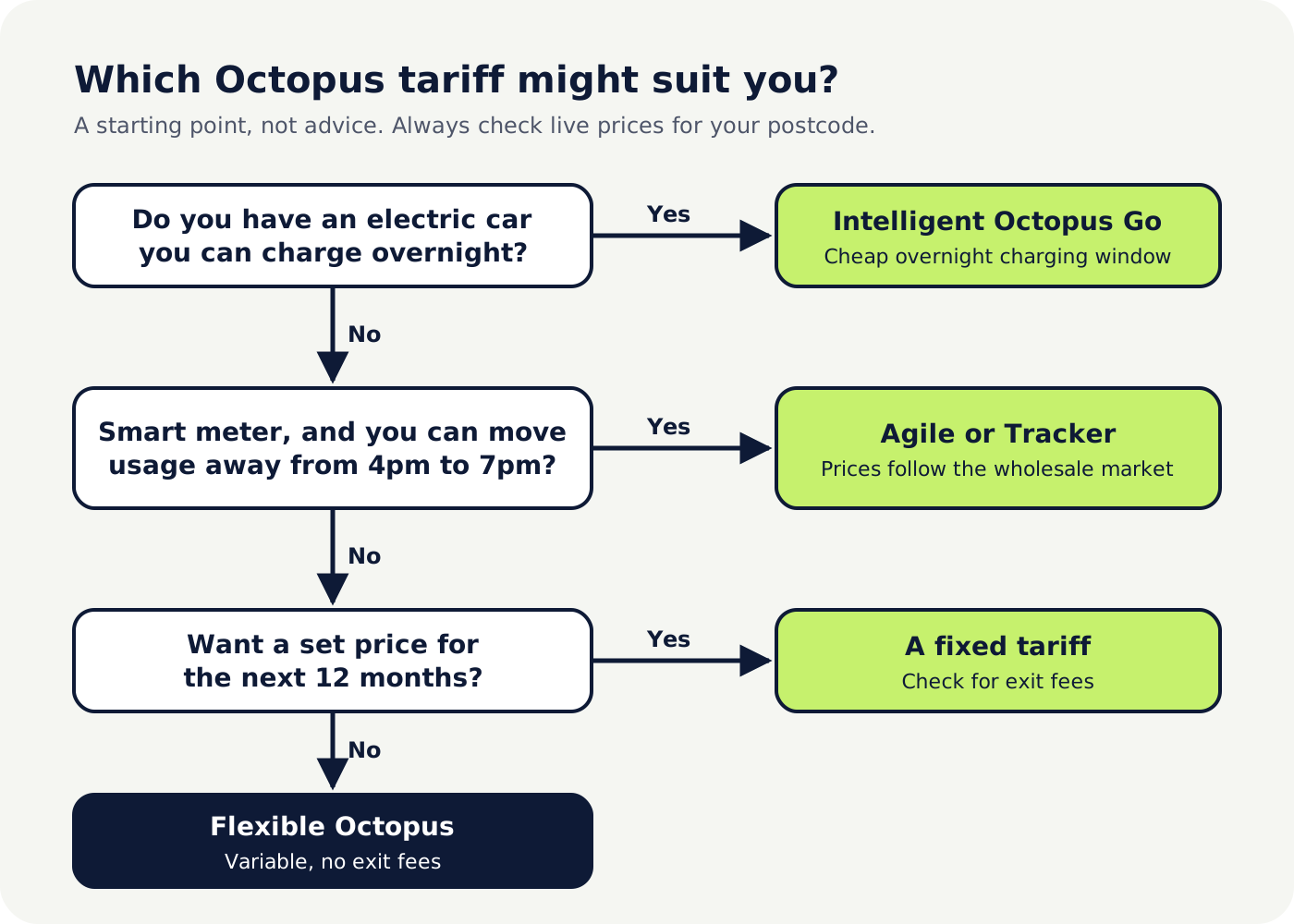
Prices for every tariff depend on where you live, so the only way to know what you’d pay is to get your Octopus quote using your postcode. It takes a couple of minutes, and there’s no obligation.
Step 6: Switch, if the numbers say so
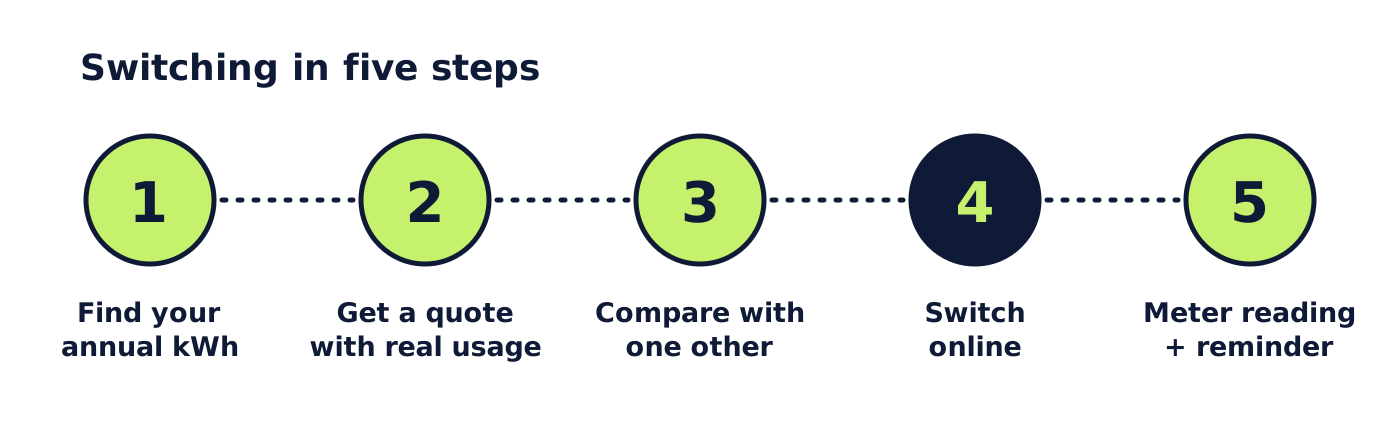
- Have your numbers ready: your annual kWh for each fuel, your current tariff and its end date.
- Get a quote using your real usage, not an estimate. You can start your Octopus quote here.
- Compare it with at least one other option, such as your current supplier’s best fixed deal, looking at the total yearly cost, not just the unit rate.
- Switch online. Octopus arranges everything with your old supplier and your supply isn’t interrupted. Under Ofgem’s rules, switches complete within 21 days, and you have a 14-day cooling-off period if you change your mind.
- Take a meter reading on switch day so your final bill from the old supplier is accurate, and set a reminder for a few weeks before any new fixed deal ends.
About the £50 credit: when you join online through a referral link, the credit is added to your account once your switch completes and your first direct debit has been taken, usually within a few weeks.
The short version
Find your annual usage, unit rates and standing charges on your bill. Work out what you really pay, and track your usage monthly as part of your money check-in. Then compare using your real numbers. If Octopus comes out cheaper for your home, switch to Octopus through my referral link to get £50 credit on your account.
Common questions
How do I get the £50 credit?
Sign up online using a referral link. The credit is added to your Octopus account once the switch completes and your first direct debit has been taken, usually within a few weeks. Sign-ups by phone or through comparison sites don't qualify, and Octopus can change the offer, so check the terms when you join.
Will my gas or electricity be cut off when I switch?
No. The pipes, wires and meter stay the same. The only thing that changes is who bills you, and Octopus handles the switch with your old supplier.
Do I need a smart meter to switch to Octopus?
No. You can switch without one and start on a standard tariff. You'll need a smart meter for tariffs like Agile, Tracker and Intelligent Octopus Go, and you can arrange one later.
I'm on a fixed deal with another supplier. Should I switch now?
Check your end date and exit fees first. If the fee is small and the saving is bigger, switching early can still pay. Otherwise, set a reminder for a few weeks before your deal ends.
What if I'm struggling to pay my energy bills?
Tell your supplier as soon as you can. They must help if you ask, for example by setting up an affordable repayment plan or offering emergency credit.
This article is general information, not personal financial advice. Your situation is your own, so check the details for yourself or speak to a regulated adviser before making big decisions. Where investments are mentioned, their value can go down as well as up.